Opinion leaders from Slovenia and Hungary participating in the CROCUS project held a joint dance house event
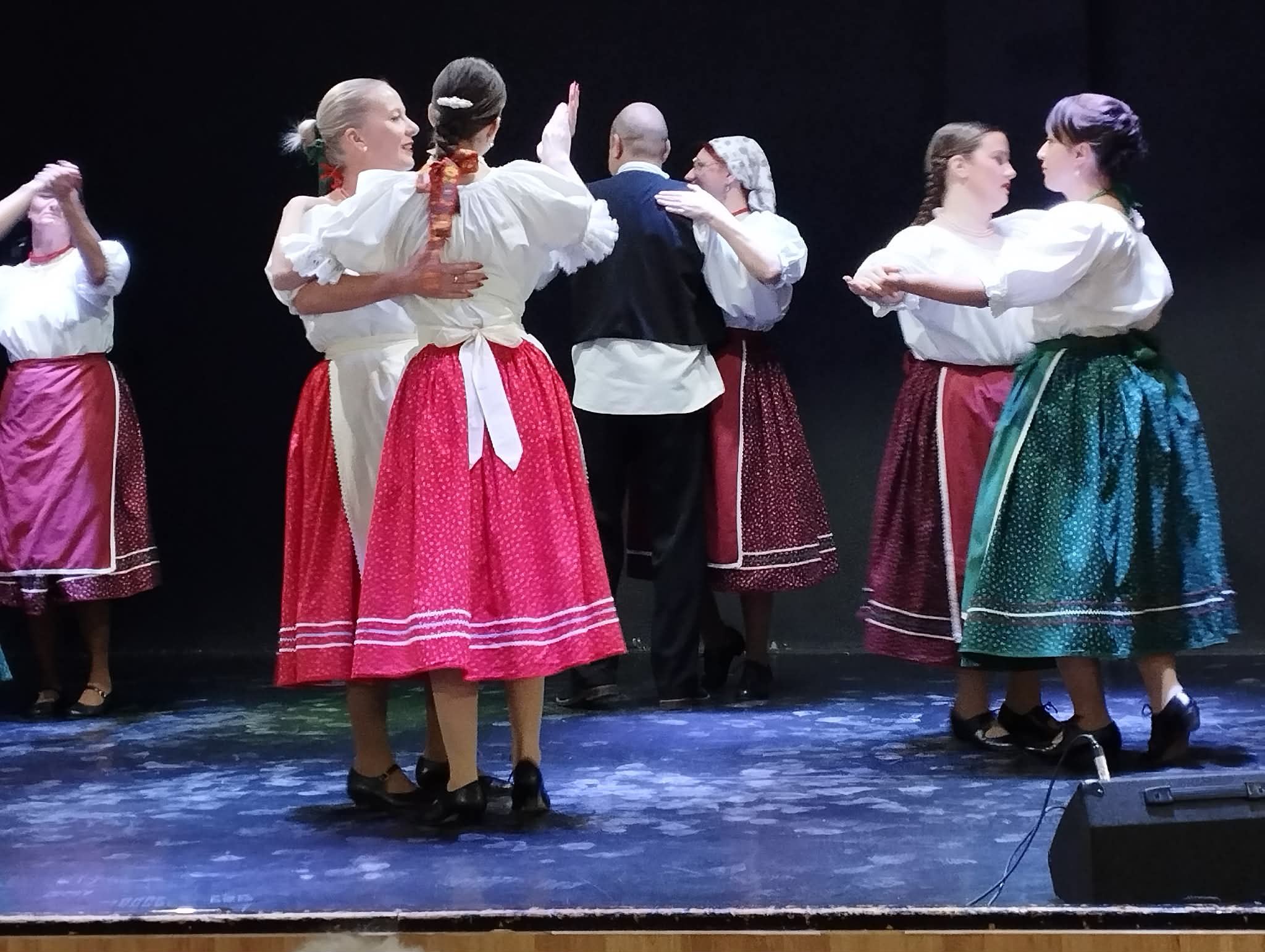
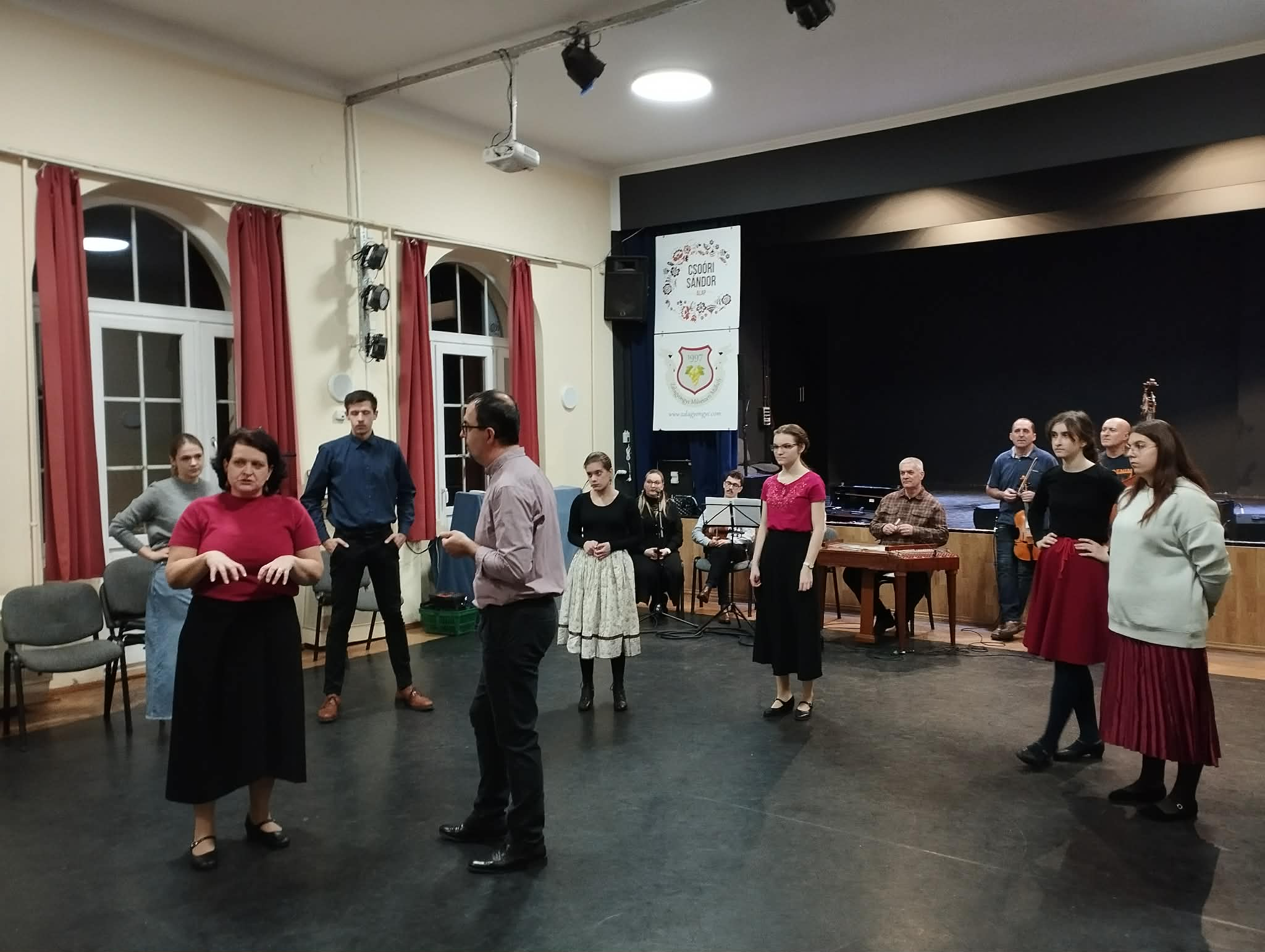
The dance house held on Saturday at the Móricz Zsigmond Cultural Centre in Nagykanizsa started with a performance by the Zsitkóc Slivovica Folk Dance Ensemble. This was followed by Alenka and Rudolf Toplak, who presented and taught dances from the Lendava region to the participants of the dance house.
The Zsitkóc Slivovica Folk Dance Ensemble is one of the most important tradition-preserving groups of the settlement of Zsitkóc (Žitkovci) in the Muravidék region, focusing on nurturing local Hungarian and Slovenian folk culture. The ensemble is based in Zsitkóc, which administratively belongs to the Municipality of Dobrovnik. Its repertoire primarily includes Hungarian folk dances from the Muravidék region (such as slow and fast csárdás dances and verbunk dances) and folk songs, but also frequently features bourgeois dances characteristic of the region. The ensemble often performs across the border at festivals in Hungary as well. In Zsitkóc, both an adult and a children’s folk dance group operate, ensuring the transmission of traditions to younger generations. The name of the group, “Slivovica,” refers to the plum brandy typical of the region, which symbolizes local agriculture and hospitality. The ensemble’s work is closely linked to the cultural activities of the Muravidék Hungarian Self-Governing National Community (MMÖNK), which supports the preservation of minority Hungarian culture in Slovenia.
The professional work of the Zsitkóc Slivovica Folk Dance Ensemble is indeed supported by István Tóth “Csonti” as a dance teacher and choreographer. He is a member of the Core Development Team of the CROCUS project and the director of the Móricz Zsigmond Cultural Centre in Nagykanizsa. In the course of his work, he collaborates closely not only with the Zsitkóc group but also with other ensembles in the region (for example, folk dance groups in Dobrovnik).
In the Lendava region, dance collections were carried out in the 21st century at the initiative of local folk dance ensemble leaders. The Muravidék Folk Dance Ensemble, founded in 1999, toured the Carpathian Basin until 2010 without being able to present its own Muravidék or Lendava-region material on stage. During the major wave of folk dance collecting, researchers did not reach the Muravidék region.
However, due to the performances of the Muravidék Folk Dance Ensemble, the need arose for the ensemble to appear on stage with its own dance material. As a result, between 2007 and 2010, the then leaders of the ensemble, Alenka Toplak and Rudolf Toplak, visited elderly members of the region to ask how and what they danced in their youth, and what festivities and weddings were like at that time.
The result of six collecting occasions is approximately seventeen hours of recordings containing conversations about dance, dance life and dance occasions, dance and wedding customs, as well as dance demonstrations by middle-aged and elderly participants. Only traces of old-style dances could be recalled from memory, although their folk music material has survived. The region’s new-style dances include the csárdás, fast csárdás and circle csárdás, which are rather poor and worn in terms of motifs, and the motifs of the csárdás and fast csárdás differ very little from each other. When weddings are mentioned, however, a multitude of popularized bourgeois social dances emerge from memory. The wedding dance repertoire of the region is very rich, and a significant part of the dance heritage consists of Western-origin, popularized bourgeois social dances. Those interviewed performed seventeen different wedding and bourgeois-origin dances. These dances represent folk dance for the local population.
The extent of the dance dialect boundaries of this region cannot be precisely determined. This would require a more detailed comparative analysis comparing the dances of Muravidék with those of other areas of Zala and Vas counties, as well as with Slovenian dances of Muravidék and Croatian dances of Međimurje.
Rudolf Toplak, president of the Petőfi Sándor Cultural Association of Dobrovnik, and his wife, Alenka Toplak, a teacher and folk dancer, are also members of the Core Development Team of the CROCUS project. The “Dobrovnik dances” are connected to the Muravidék Hungarian folk dance traditions, specifically to the old dance and musical material of the area around the Municipality of Dobrovnik, where the “Gólyamadár” (Stork Bird) is a well-known folk song (and dance) motif that appears in folk music collections and forms part of the local cultural heritage, also featured in descriptions of dances and folk customs. In addition to the csárdás and fast turning dances, participants of the dance house also became acquainted with the folk dance associated with the Gólyamadár folk song.
This borderless dance house also demonstrates how many cultural connections are hidden in border regions.