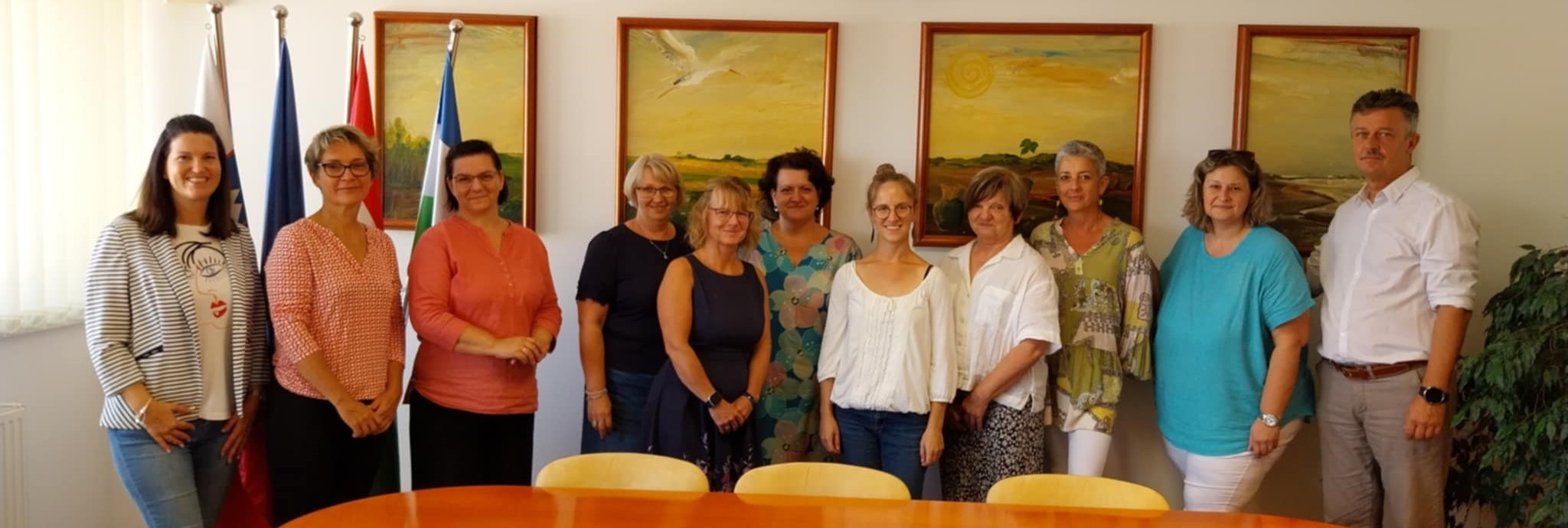
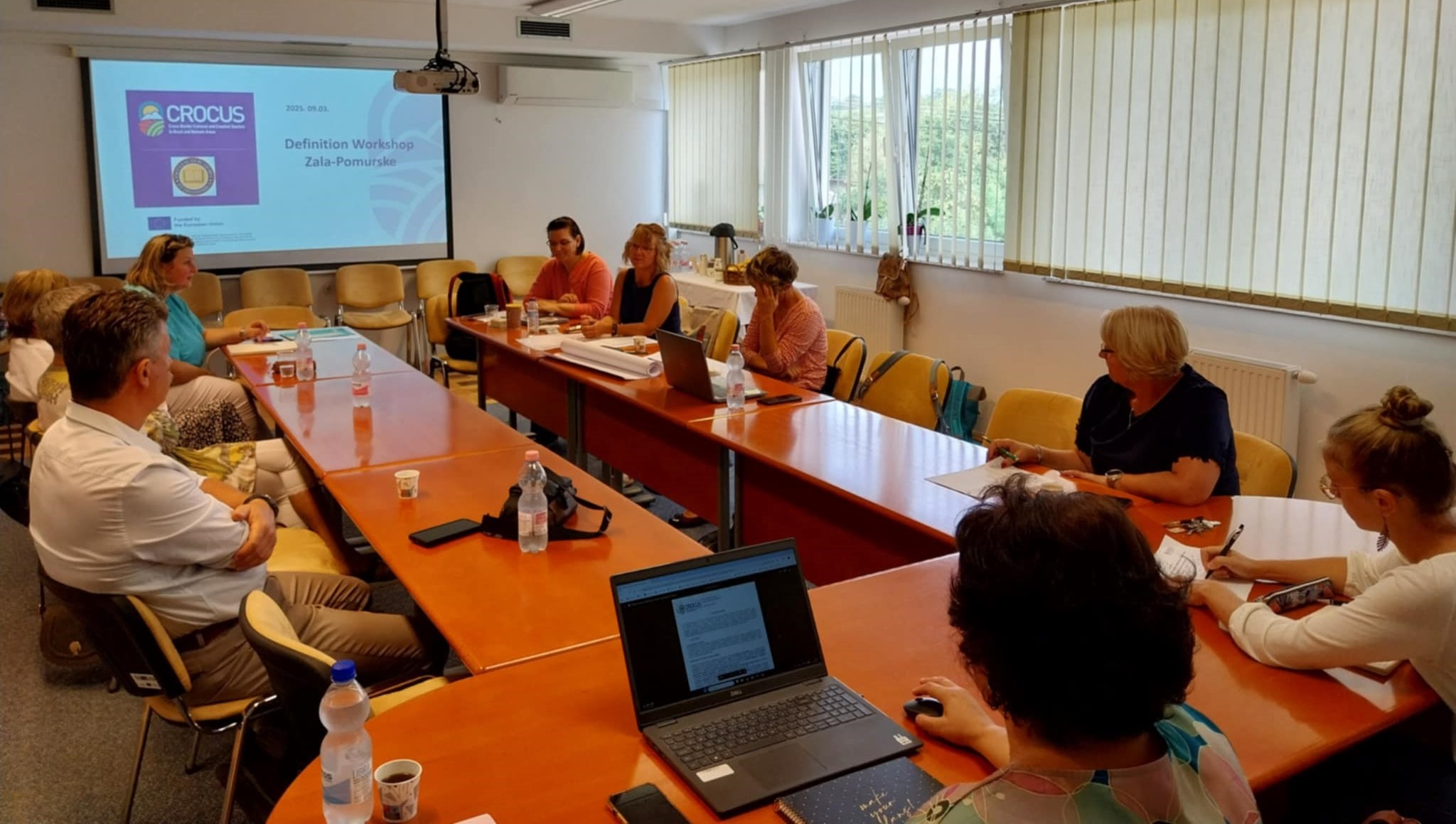
On September 3, 2025, the Definition workshop aimed at developing cross-border cultural and creative tourism was held as part of the CROCUS project.
The CROCUS project team from the University of Pannonia and experts from Zala – Pomurske Living Lab gathered in Dobronak to discuss the results achieved so far and the tasks ahead.
The researchers of the University of Pannonia – Dr. Ágnes Raffay-Danyi, Dr. Katalin Lőrincz, and Dr. Zsófia Papp – presented a study based on primary and secondary research collected in the Slovenian-Hungarian region.
More about the research:
The quantitative and qualitative research conducted as part of the CROCUS project examined the attitudes of local residents, local businesses, and visitors toward tourism in the regions of Zala (Hungary) and Pomurske (Slovenia).
The analysis addressed sample characteristics and perceptions of the economic, socio-cultural, and environmental impacts of tourism, cultural heritage preservation, the carrying capacity of the area, sustainability, and respondents’ attachment to the region.
Steps from data collection to business model development:
1. The understanding phase began with data collection through interviews and surveys involving local businesses, citizens, tourists, and other key stakeholders.
First, a questionnaire, prepared in both languages, was sent out to opinion leaders and stakeholders in the border region in the following sectors: education, government, business, and civil society, to gauge the opinions of local residents, local entrepreneurs, and tourists.
The 15 expert interviews conducted during the research sought to explore the tourism development opportunities and challenges in the region, with a particular focus on the opportunities and challenges arising from its border location.
2. In the interpretation phase, the collected data was used to define the parameters for new, sustainable CCT (cultural and creative tourism) business models. These parameters were presented by the project team members at the workshop in Dabronak in September, where they also collected feedback to refine the ideas.
The project team has already completed phase 2, and the following steps are scheduled for the future:
3. In the ideation phase, Living Labs will hold workshops on both sides of the border to gather ideas for business model prototypes with the involvement of various stakeholders, including citizens and policy makers.
4. Using the insights gained from brainstorming, during the model creation phase the living labs will develop two sustainable CCT business model prototypes in the model creation phase using the Sustainable Business Model Canvas tool. These models will be further refined based on feedback collected at workshops held in each region.
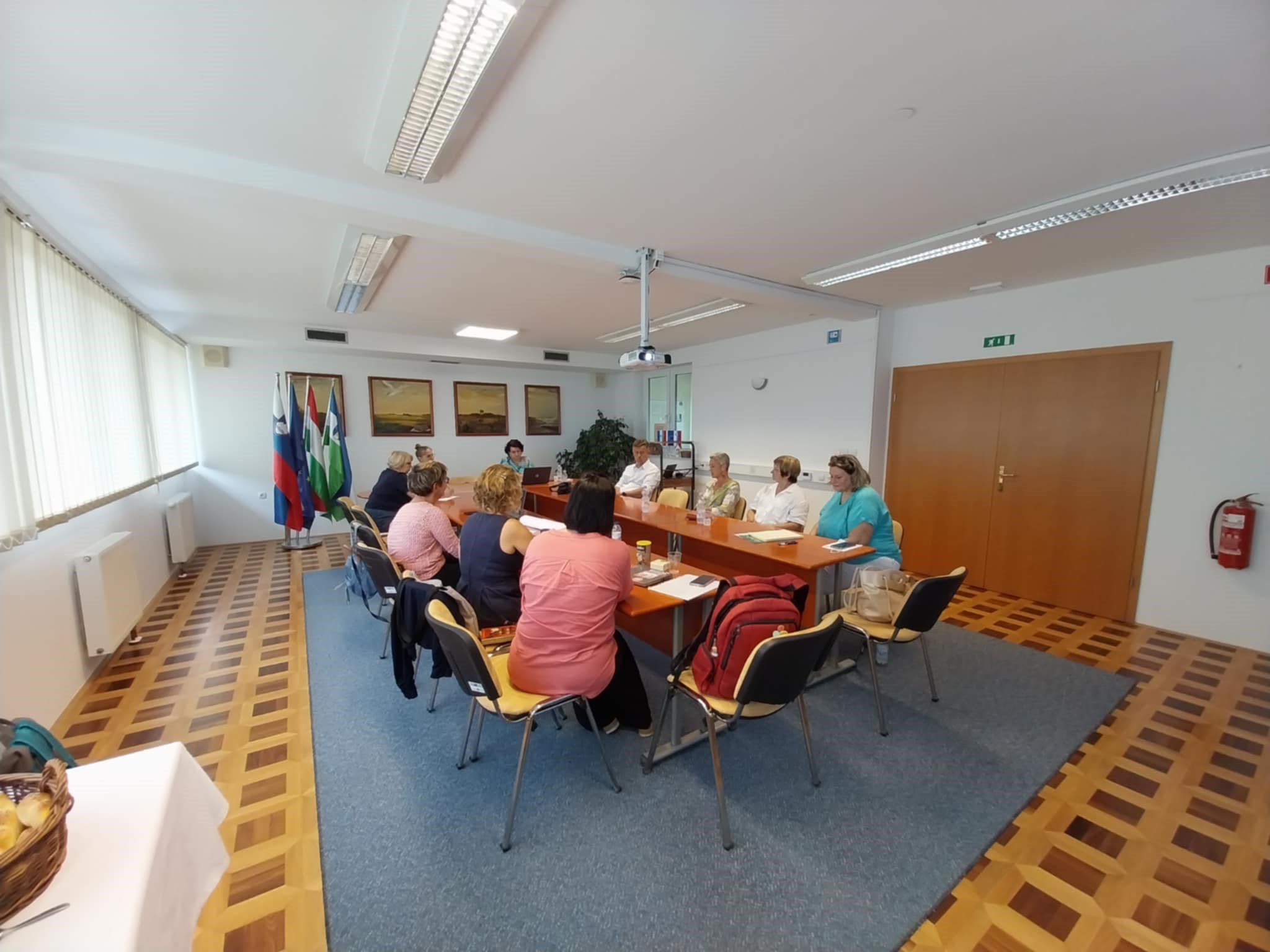
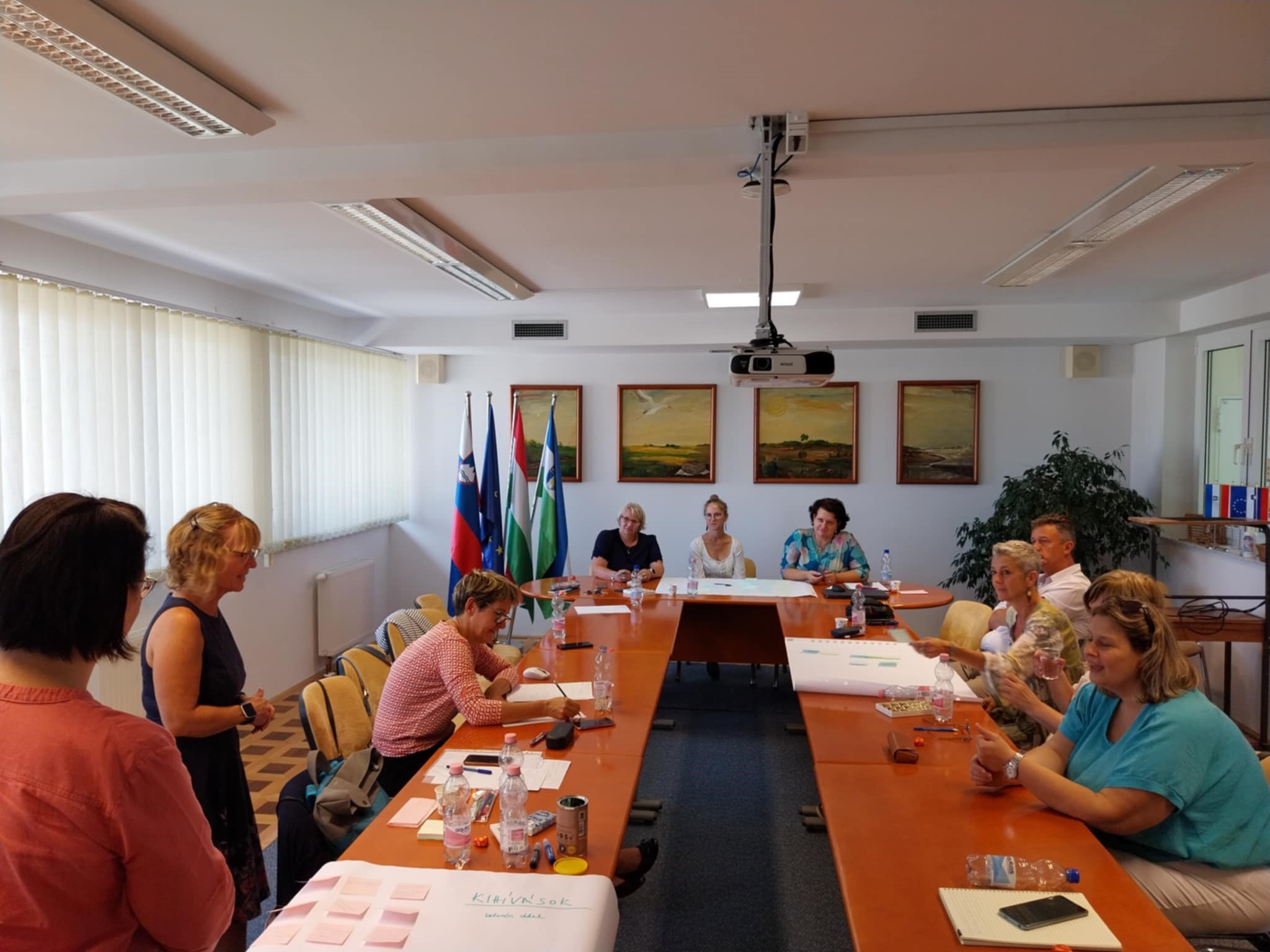
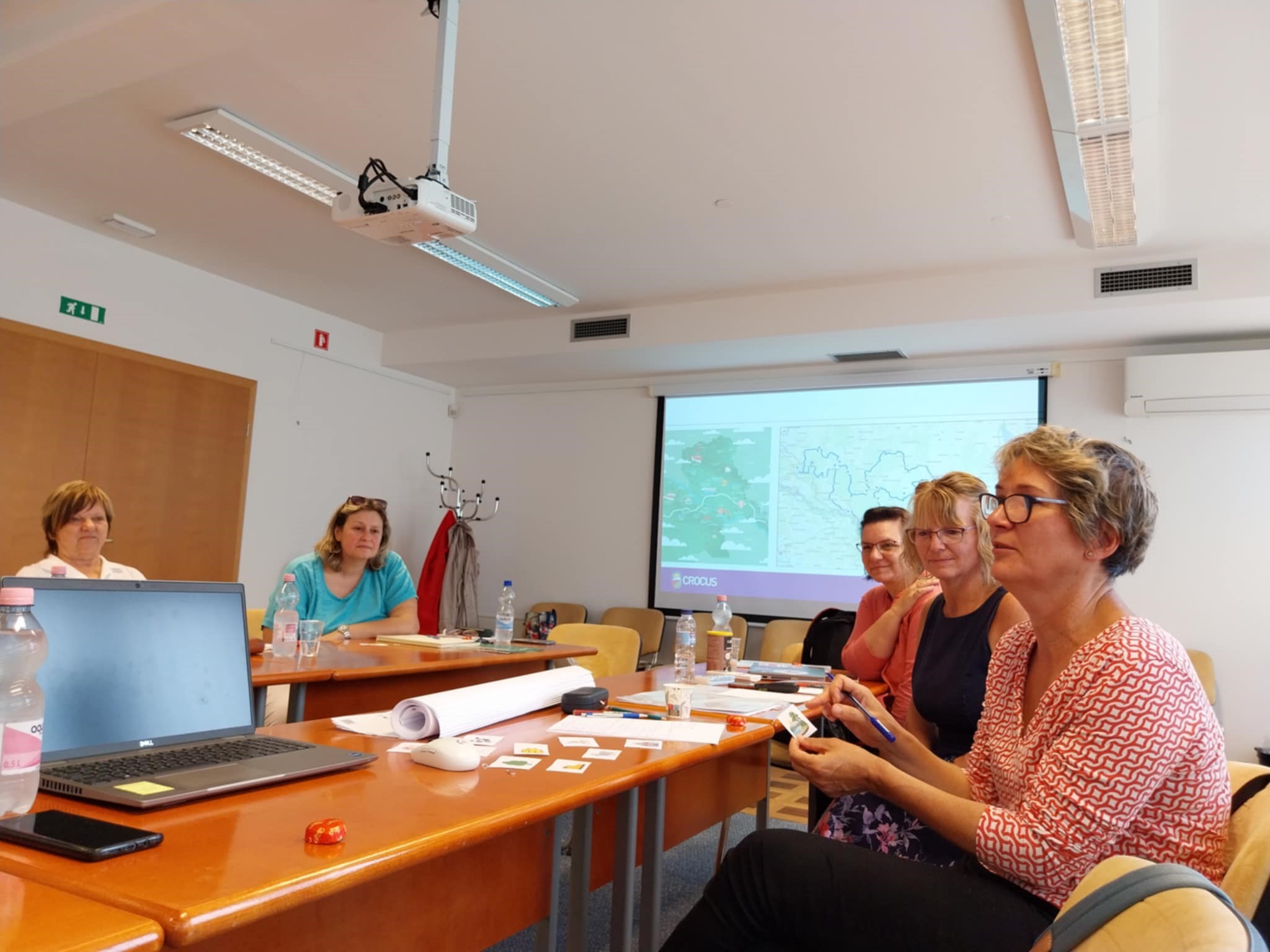
The workshop in Dabronak proved to be extremely effective, with the partners making great progress in the project. After the professional work, the participants were of course able to “sample” the region’s tourist attractions:
- they got a taste of local gastronomy at the Hancsik Farm;
- they then visited Moravske Toplice, a Slovenian town known for its thermal baths surrounded by a golf course;
- and ended the day at the Passero Farm, which is famous not only for its own wines and meats, but also for its divine chocolates. Thanks to the owner’s hospitality and the tastings, the CROCUS team ended the workshop with some truly sweet experiences.